Clothes Moths

What Are Clothes Moths?
Clothes moths are small insects whose larvae feed on susceptible natural materials, particularly wool, fur, feathers and other animal-derived fibres.
They can damage clothing, carpets, rugs, upholstery and stored textiles. Infestations often develop unnoticed because the larvae prefer sheltered, undisturbed areas.
The two principal species associated with textile damage in UK properties are the common clothes moth and the case-bearing clothes moth.
Correct identification is important because not every small moth found indoors is a clothes moth.
How to Identify Clothes Moths
Adult clothes moths are generally small and relatively inconspicuous. They often avoid bright, exposed areas and may be seen moving around wardrobes, carpets or furniture.
Common Clothes Moth
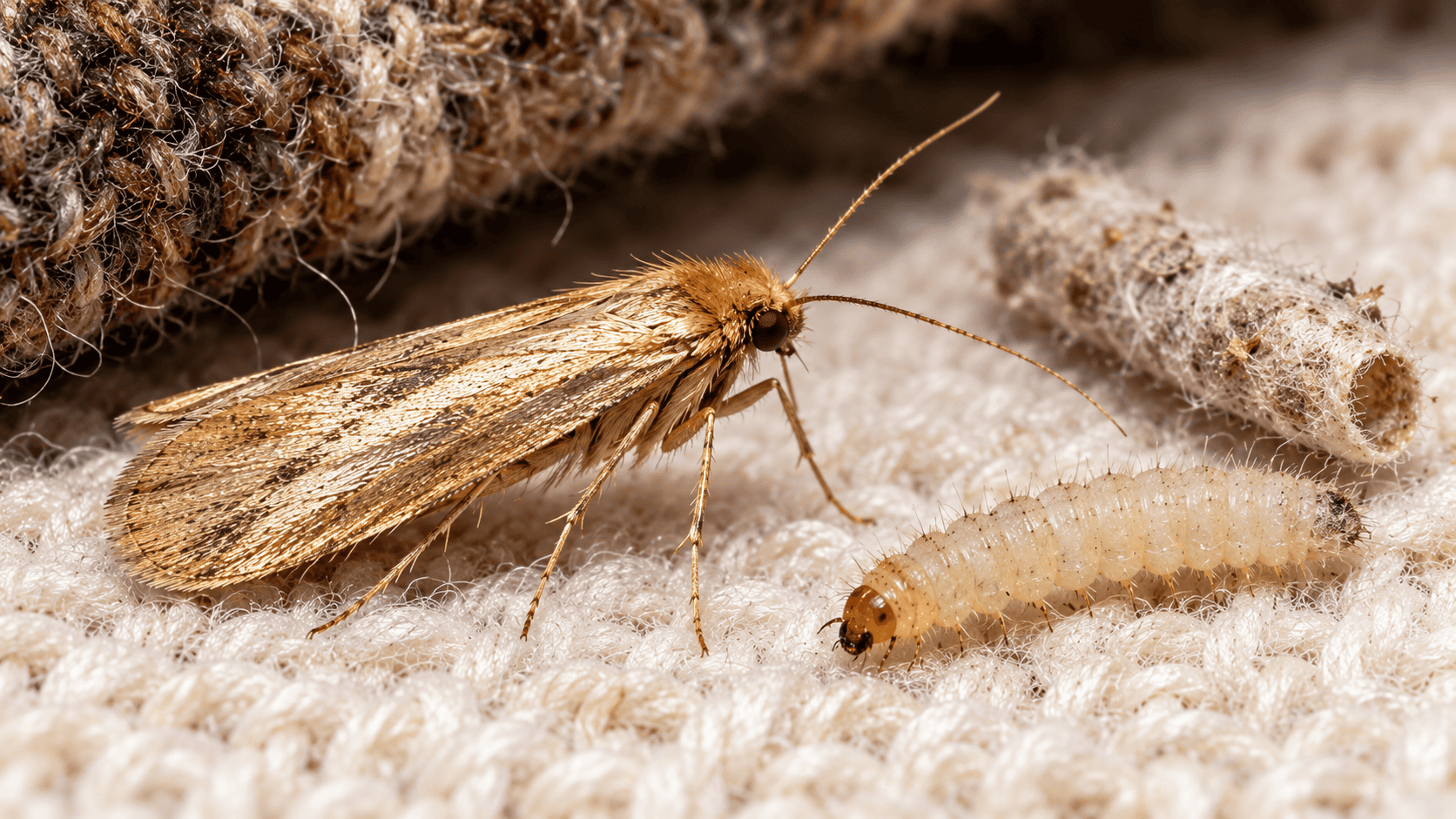
Tineola bisselliellaAlso known as the webbing clothes moth, this species generally has pale golden or straw-coloured forewings, often with a silky appearance.
The larvae produce silk as they feed, which can become mixed with fibres, debris and droppings.
Key identification feature:Relatively uniform golden forewings, without the distinct darker spotting associated with some other species.
Case-Bearing Clothes Moth
Tinea pellionellaThis species has more mottled or greyish-brown forewings, often showing darker markings.
Its larvae construct portable cases using silk and surrounding fibres. They carry these cases while feeding and moving.
Key identification feature:Portable, fibre-covered larval cases found on or near susceptible textiles.
A moth flying around a room does not automatically mean there is a clothes moth infestation. Pantry moths and other small moth species may look similar. Where possible, examine the insect, larvae and associated damage together.
The Clothes Moth Lifecycle
Clothes moths develop through four stages: egg, larva, pupa and adult. The time taken to complete development varies considerably with temperature, humidity, food quality and species.
Egg
Females deposit eggs close to materials suitable for larval feeding.
Larva
Larvae feed on susceptible materials. This is the principal damaging stage.
Pupa
The insect undergoes transformation before emerging as an adult moth.
Adult
Adult moths reproduce and disperse, allowing new infestations to develop.
The larval stage may last for months under some conditions. Removing visible adult moths alone will not necessarily eliminate developing larvae hidden in textiles, carpets or other materials.
Signs of a Clothes Moth Infestation
The first sign is often damage to clothing or carpets rather than a large number of flying moths.
Where should you inspect?
Pay particular attention to carpet edges, beneath heavy furniture, wardrobes, drawers, stored clothing, upholstered furniture and undisturbed rugs.
Inspect both sides of removable textiles where practical. Larvae may be found in folds, seams and protected areas that are rarely disturbed.
Textile damage can also result from wear, snagging, carpet beetles and other causes. Finding larvae, cases, webbing or correctly identified adult moths provides stronger evidence.
What Attracts Clothes Moths?
Clothes moth larvae require suitable food and protected places to develop. Animal-based fibres containing keratin are particularly vulnerable.
- Woollen carpets, clothing and blankets.
- Cashmere, fur, feathers and some upholstery.
- Undisturbed natural-fibre rugs and textiles.
- Soiled or poorly stored susceptible materials.
- Animal hair, lint and other accumulated organic debris in sheltered locations.
Clothes moth larvae do not normally feed on clean synthetic fibres alone. However, mixed fabrics and textiles containing animal-derived fibres can still be at risk.
How to Get Rid of Clothes Moths
Effective treatment begins by identifying the species, locating the breeding areas and dealing with infested materials. The appropriate approach depends on the extent and location of the infestation.
Inspection and Identification
Check vulnerable textiles, carpet edges, furniture and storage areas. Determine whether the problem is active and identify the materials supporting larval development.
Vacuuming and Cleaning
Thoroughly vacuum affected areas, particularly carpet edges and inaccessible spaces where practical. Dispose of collected debris promptly in a sealed bag.
Laundering and Freezing
Suitable textiles can be treated through appropriate laundering or controlled freezing. Follow garment care instructions and use a method capable of reaching the required conditions throughout the item.
Professional Heat Treatment
Carefully managed heat treatment may be suitable for certain infestations. Effective treatment depends on the temperature actually reached within affected materials and harbourages, not simply the surrounding room air.
Targeted Insecticide Treatment
Where appropriate, trained professionals may use authorised products in accordance with their labels. Products must be suitable for the intended surfaces and treatment locations.
Monitoring and Follow-Up
Monitoring helps establish whether adult activity continues. Further inspection or treatment may be needed if larvae remain in untreated materials or concealed locations.
Thick materials, enclosed voids, insulation, packed belongings and poorly accessible locations can prevent adequate heat penetration. Professional temperature monitoring and careful assessment are essential. Heat-sensitive items may also be damaged.
Do pheromone traps eliminate clothes moths?
Pheromone traps can be useful for detecting and monitoring particular clothes moth species. They usually attract males and should not be relied upon as the sole treatment for an established infestation.
How to Prevent Clothes Moths Returning
Prevention is largely about removing breeding opportunities and making susceptible materials easier to inspect.
One common mistake is moving potentially infested belongings into a single crowded room or storage area. This can spread the problem and make effective inspection and treatment much more difficult. Keep suspect materials contained until they can be assessed and dealt with.
Common Clothes Moth Treatment Mistakes
- Treating visible adult moths without locating the larvae.
- Assuming all small indoor moths are clothes moths.
- Ignoring carpets beneath furniture and other undisturbed areas.
- Moving untreated textiles between rooms.
- Using moth traps as the only control method.
- Failing to empty or dispose of vacuum contents safely after cleaning.
- Assuming room temperature measurements prove heat has penetrated every material.
Recurring activity does not automatically mean a treatment was ineffective. The source may have been missed, an untreated item may remain, or moths may have been introduced again. A fresh inspection is needed to establish the cause.
Frequently Asked Questions
Do clothes moths eat clothes?
The larvae cause the damage. Adult clothes moths do not feed on clothing in the same way as their larvae.
Can clothes moths damage carpets?
Yes. Wool carpets and rugs can be vulnerable, especially in undisturbed areas beneath furniture and along edges.
Do clothes moths eat cotton?
Clean cotton is not a preferred food source for typical clothes moth larvae. However, mixed-fibre textiles and contaminated materials may require closer examination.
Will vacuuming get rid of clothes moths?
Vacuuming can remove some eggs, larvae, debris and suitable food material. It is useful, but may not reach every infested textile or concealed location.
Can clothes moths survive heat treatment?
They may survive where lethal conditions have not been achieved, particularly inside insulated, packed or inaccessible materials. Temperature verification matters more than heater settings alone.
Do I need to throw away infested clothes?
Not necessarily. Many items can be cleaned or treated appropriately. Disposal may be considered for severely damaged or impractical-to-treat items.
Are clothes moths dangerous to people?
Clothes moths are primarily a textile pest rather than a biting pest. Their main significance is damage to susceptible belongings.